

Why Raw AI Writing Fails SEO & Readers in 2026
AI content writing has completely changed how we approach digital marketing, but publishing raw, unedited text is the fastest way to make your website invisible. Today, search engine algorithms are highly sophisticated. Furthermore, they don’t just look for generic keyword density; they look for genuine expertise and human-like flow. If your content sounds like a robotic template, readers will bounce, and your organic rankings will drop.
• The Wrapper Economy Explained
The rapid saturation of the online SaaS marketplace has introduced a unique challenge for modern creators. Most software options on the internet today are not unique technologies. Instead, they are simply expensive wrappers built around the exact same foundational large language models. However, when you pay a premium subscription for a generic AI content writing tool, you are often just paying for a fancy interface. This dashboard simply sends a basic prompt to ChatGPT or Claude. Specifically, this is why so many platforms feel identical. They lack the deep, custom engineering required to generate truly dynamic copy.

• Why Most People Fail With AI Writing Tools
The main reason content creators fail to see results with automated text generators is that they treat them as a “one-click” solution. They type a brief prompt, copy the raw output, and hit publish. This approach creates massive structural issues, thin information value, and a complete lack of unique brand voice. If your content sounds like a robotic template, readers will bounce, and your organic rankings will drop. To win the search engine optimization game, you must treat your software as an assistant, not the final author.
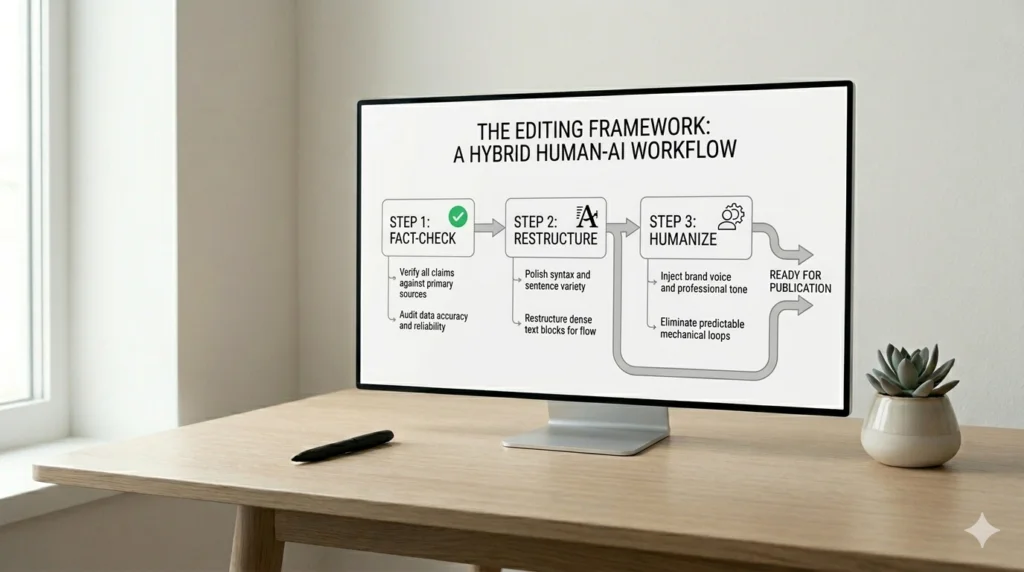
• The Editing Framework
To turn basic automated drafts into a high-performance content SEO writer framework, you need a strict manual process. First, fact-check every static claim. Second, restructure dense text blocks to maximize breathing room. Finally, use specialized utilities to polish sentence variety, eliminate predictable patterns, and humanize the overall tone before your copy ever goes live.
Top AI Content Writing & Paraphrasing Tools
Evaluating individual software applications is critical to building an efficient optimization pipeline. Instead of testing dozens of generic web interfaces, smart creators focus on utilities that offer deep algorithmic controls and specialized rewriting engines. Below is an authoritative breakdown of the top industry platforms based on direct testing, structural utility, and deployment costs.
• Clever AI Humanizer (Best Overall for Bypass & Readability)
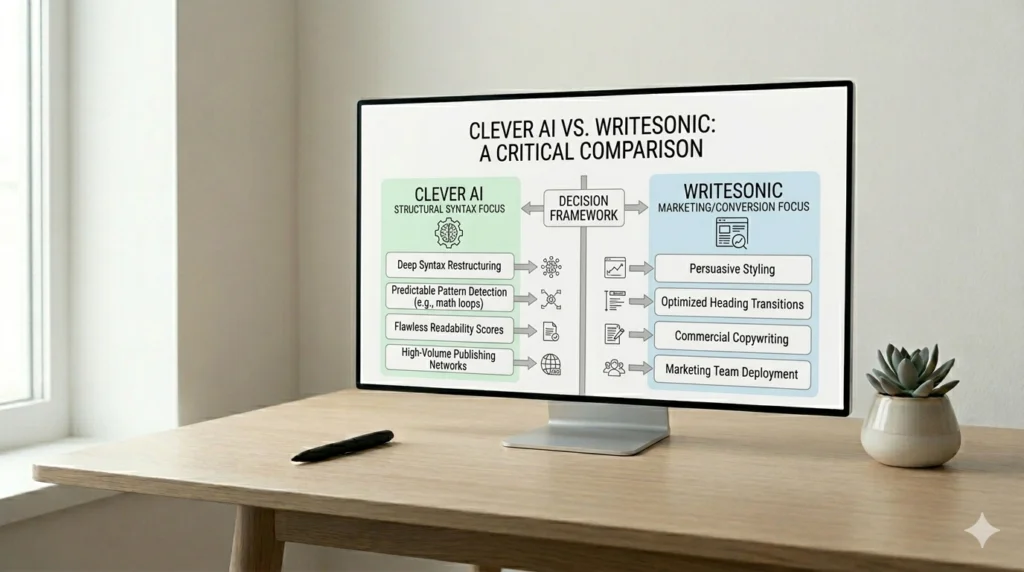
The Clever AI Humanizer stands out as an industry-standard platform for publishers. It perfectly strips mechanical patterns from your text. Standard rewriting engines simply swap out vocabulary words for weak synonyms. Instead, this system restructures the core syntax of your sentences. By mirroring the natural variation found in seasoned human copy, it maintains a flawless readability score. Consequently, it actively breaks up the predictable loops that signal automated AI content writing. Therefore, this platform is highly recommended for anyone running high-volume digital publishing networks to scale their AI content writing safely.
Pros:
- Exceptional balance between structural variety and context preservation.
- Removes predictable mathematical loops without ruining the original user intent.
- Simplifies technical jargon into accessible, high-converting language.
Cons:
- The user interface lacks a built-in long-form document layout editor.
- Processing heavy, multi-chapter documents can take extra system compute time.
• Writesonic AI Humanizer (Best for Marketing & Branded Copy)
For teams focused on conversion assets and commercial marketing streams, deploying writesonic’s ai humanizer offers a strategic advantage. This system is heavily trained on successful landing page frameworks, sales funnels, and high-performance blog posts. When you pass a rough draft through the writesonic humanizer, it doesn’t just rephrase the vocabulary—it injects persuasive styling, optimizes heading transitions, and ensures the ultimate text matches an active, professional tone of voice.
Pros:
- Tailored specifically for commercial copywriters and performance marketing.
- Excellent integration hooks for rapid multi-channel text delivery.
- Automatically surfaces hidden benefit points inside long content drafts.
Cons:
- Requires steady visual fine-tuning to prevent aggressive sales language.
- Premium credit usage structures scale rapidly for large enterprise teams.
• Claude AI (Best Free Alternative for Creative Writing)
When looking for a claude alternative for creative writing, publishers often realize that Anthropic’s core engine itself remains the most powerful baseline tool when configured correctly. For long-form informational hubs and authentic editorial storytelling, it outperforms rigid marketing frameworks. It excels at maintaining character consistency, deep narrative pacing, and nuanced transitions that standard automated text engines completely miss.
Pros:
- Unmatched contextual memory that tracks long thematic structures effortlessly.
- Avoids generic marketing fluff and predictable buzzwords by default.
- Ideal for complex conceptual breakdowns and multi-perspective articles.
Cons:
- Strict output filters can sometimes block creative dark-theme or highly speculative prompts.
- Does not include built-in live SEO keyword tracking parameters.
• Sentence Expander & Micro-Content Utilities (Best for Content Depth)
Sometimes, the challenge isn’t rewriting a whole page, but adding meaningful depth to a thin paragraph. Utilizing a dedicated sentence expander allows writers to flesh out core concepts without diluting the information value. Furthermore, when combined with smart text to paragraph processing pipelines, this approach upgrades your AI content writing workflow. It takes simple bulleted thoughts and scales them into comprehensive, highly readable content blocks. This ensures your AI content writing satisfies both human readers and search engine crawlers.
Pros:
- Instantly adds topical authority to thin, underperforming sections of a post.
- Bridges logical gaps between disconnected conceptual statements.
- Keeps the expanded output clean, concise, and professional.
Cons:
- Overuse can occasionally introduce redundant sentences if the input prompt lacks core data.
- Requires manual verification to ensure the added text directly benefits the user intent.
• Sentence Unscrambler & Grammar Modifiers (Best for Structural Fixes)
For editors managing content scaling systems, structural line optimization is a daily task. Integrating a high-performance sentence unscrambler into your drafting workflow simplifies how you fix disjointed lines and messy syntax. Rather than relying on a heavy word processor, a focused grammar modifier cleans up automatic transcription errors, straightens inverted clauses, and ensures that complex multi-line arguments flow perfectly across different device screens.
Pros:
- Perfect for organizing rough research notes or dictated speech blocks into clean rows.
- Fixes deep-seated passive voice and awkward syntax issues in milliseconds.
- Greatly accelerates the speed of copy editing and multi-author review loops.
Cons:
- Mostly limited to paragraph-level line adjustments rather than macro article formatting.
- Highly technical strings or unique industry jargon might still require a manual human touch.
• AI Speech & Book Writer Utilities (Best for Long-Form Assets)
Scaling long-form digital assets requires a processing setup that understands extended narrative archs and spoken cadence. Utilizing a specialized AI speech writer ensures that conversational scripts, keynote presentations, and podcast outlines sound natural when read aloud. This approach helps you avoid the stiff phrasing of standard text tools. Similarly, when building multi-chapter guides or downloadable lead magnets, you need the best AI book writer free tier application. Furthermore, this allows indie publishers to organize heavy plots and structure character profiles without running into restrictive daily token limits.
Pros:
- Adapts beautifully to spoken pacing, rhythmic pauses, and rhetorical structures.
- Handles deep organizational layouts across tens of thousands of words fluidly.
- Drastically reduces the time required to script multimedia video tracks and long essays.
Cons:
- Long-form generations still require manual thematic checks to prevent plot or fact drift.
- Free versions often have deep character limitations on a single input box prompt.
Free Ahrefs & SEO Alternatives for Content Marketers
• The Premium Data Gap
Running a digital platform requires deep insights. However, the steep financial barrier of enterprise software keeps many independent creators from scaling. For a solo publisher or freelance writer, paying hundreds of dollars a month for keyword tracking is simply not realistic. Consequently, this cost mismatch creates a massive gap where raw talent is often held back by a lack of access to clean keyword analytics.
• Navigating the Free SEO Ecosystem
Fortunately, you do not need an enterprise budget to discover high-yield ranking opportunities. Smart marketers actively hunt for ahrefs free alternatives to map out search trends, track competitor visibility, and run technical domain audits without opening their wallets. By combining platform tiers like Google Search Console, free backlink checkers, and public database indexers, you can build a comprehensive optimization stack completely free of charge.
You can extract premium metrics without paying a premium price. Learning how to use Ahrefs for free through their Webmaster Tools network is a massive shortcut. This configuration allows site owners to scan their own properties for health errors and inspect internal link distribution. As a result, you can monitor organic keyword impressions automatically.
To complement your research data, deploying localized free AI content writing software directly inside your editor ensures that your final drafts match active market queries. In addition, utilizing targeted AI content writing tools to map semantic headers, verify real-time keyword insertion, and score text readability ensures your copy stands a real chance of hitting page one. Therefore, your content can rank well without requiring a heavy financial investment.
Decision Framework: Which Tool Do You Actually Need?
Choosing between different software platforms can be overwhelming. To prevent subscription fatigue and save your budget, use this minimalist vertical filtering framework to determine exactly what utility your workflow requires right now.
• Step 1: The Free Tier Test
Before entering your credit card details on any premium content platform, you must rigorously assess their free configurations. A professional trial assessment follows a strict three-point checklist:
- The Feature Lock Check: Does the free version allow you to test the actual core rewriting algorithm, or is it just a basic marketing skin that forces an immediate upgrade?
- The Output Volume Limit: Calculate how many characters or words you can generate for free daily. If a tool gives you 5,000 free words per month, that is usually enough to test its handling of nuanced context.
- The Export Mechanics: Verify if the system allows you to copy clean text patterns smoothly, or if it embeds heavy hidden formatting tags that ruin your clean Elementor text editor styling when pasted.
• Step 2: Spotting Software Red Flags
Do not waste your hard-earned capital on premium writing platforms if you notice any of these three operational warning signs during your initial trial run:
- The “Synonym Stuffing” Trap: If a paraphrasing tool simply replaces every third word with a random dictionary synonym without shifting the overall sentence architecture, it will ruin your readability. Avoid it immediately.
- Aggressive Credit Caps on Humanizers: If a platform counts simple punctuation fixes or minor syntax shuffles against your high-tier premium word credits, the tool is designed to drain your subscription wallet prematurely.
- Zero Custom Integration Hooks: In today’s landscape, if an automated content system does not offer easy browser extensions, web-app shortcuts, or clean copy-paste buffers that work where you write, the added friction will slow down your publishing velocity.
Common Mistakes When Using AI Writers (And How to Avoid Them)
Even with access to advanced algorithms, the ultimate performance of your digital copy depends entirely on execution. Many publishers unknowingly sabotage their organic growth by repeating the same structural processing errors. Avoiding these three critical pitfalls ensures your content remains both visible to search engines and deeply engaging to human readers.
1: Publishing Raw AI Output without Fact-Checking
The most dangerous habit in modern digital publishing is trusting an automated engine to verify its own data. Language models are designed to predict the most statistically probable next word, not to audit historical or technical facts. When you generate text, the software can effortlessly produce realistic-sounding statistics, fake historical dates, or broken code snippets with absolute confidence. Publishing this unchecked copy destroys your digital brand’s authority and triggers structural quality penalties across search engine indexing systems.
- How to avoid it: Establish an absolute rule in your workflow: never publish a piece of data unless a human editor has verified it against a reliable primary source. Treat every statistic, metric, and case study reference inside an automated draft as an unverified rumor until proven otherwise.
2: Expecting AI to Compensate for Weak Initial Outlines
An automated generator is only as good as the contextual constraints you provide. If you pass a generic, lazy prompt like “write an article about search engine optimization tools” into a text box, the software has no choice but to deliver repetitive, surface-level fluff. It will simply copy the most basic concepts found across the internet, producing a flat, uninspired wall of text that fails to offer any unique value or fresh perspective to the user.
- How to avoid it: Build a highly detailed structural framework before opening your generation software. Map out your target headings, define the specific brand voice parameters, and inject your own real-world expertise directly into the initial prompt. Force the tool to expand upon your unique knowledge assets rather than allowing it to guess your intent.
3: Chasing 100% “Undetectable AI” Scores and Ruining Readability
In a desperate attempt to bypass machine classifiers, many creators over-optimize their text using aggressive software combinations. They pass their copy through multiple layers of algorithmic humanizers until the original sentence variety is completely ruined. Consequently, in the pursuit of an artificial green checkmark score on an external detector dashboard, their AI content writing becomes weighed down by bizarre grammatical syntax. Furthermore, this process leads to convoluted sentence patterns and frustrating vocabulary choices that ruin the user experience.
- How to avoid it: Prioritize user experience over automated dashboard scores. If a line of text passes an artificial detector but reads like an awkward riddle to a real human being, it will ruin your user retention and conversion metrics. Focus heavily on natural flow, clean line-height balance, and sharp, conversational prose that directly answers the reader’s search intent.

Frequently Asked Questions (FAQs)
• How does an AI writer or content generator work?
At its core, a modern text engine functions by analyzing massive datasets of human language. It predicts the most logically sound next word in a sequence. When you provide an input prompt, the software processes your request through deep contextual layers to match your intent. These systems excel at structuring syntax and brainstorming concepts rapidly. However, they do not possess real-world understanding or factual knowledge. Therefore, they are pattern-recognition tools that require active human editing.
• How can I make AI-generated content sound more like my brand voice?
To inject your personal or corporate tone into automated copy, you must move away from generic, open-ended prompts. Start by providing the generator with a direct sample of your previous high-performing content, specifying your preferred tone parameters (e.g., professional, witty, minimalist). Additionally, running raw drafts through a dedicated content SEO writer pipeline allows you to manually adjust sentence lengths, remove robotic clichés, and align transitions with your authentic communication style.
• Can AI writers produce high-quality, human-like content?
Yes, but only when treated as an advanced drafting assistant rather than a completely automated autopilot system. High-quality output is always the result of a rigorous hybrid workflow. If you use generation software to build structural outlines, flesh out thin research notes, and clean up awkward phrasing, the ultimate copy will read seamlessly. However, if you rely entirely on one-click solutions without executing a strict human review process, the text will lack the nuance and deep empathy required to rank well.
• What are the best free content writing software options for beginners?
Creators working with minimal budgets can start with powerful baseline systems. Platforms like the free versions of Claude and ChatGPT offer immense flexibility for long-form drafting. In addition, you can explore specialized free tiers to handle structural fixes and syntax optimization without spending money. Consequently, leveraging these configurations allows you to track basic keyword distribution and refine your writing pipeline free of charge.
• Will using an AI paraphraser trigger plagiarism detection systems?
Standard automated systems that perform basic word-swapping can easily trigger match alerts if they copy original source phrasing too closely. However, if you deploy an advanced syntax platform that fundamentally changes how ideas are presented, the final text will pass high-level checks smoothly. To guarantee complete structural originality, you should always treat raw generations as an experimental layout, checking your final paragraph rows through a dedicated plagiarism tracker before going live.
• How do search engines like Google rank humanized AI text grids?
Search systems do not automatically penalize text just because an algorithm assisted in creating it. Instead, they rank your articles based on real-world information value, data accuracy, and user engagement metrics. If your final document flow uses clean spacing, directly solves the reader’s question, and bypasses predictable robotic filler loops, your pages will earn premium rankings. The code for success is prioritizing human utility over raw output velocity.
• Can I integrate these optimization tools into my daily writing apps?
Yes, multi-device accessibility is the standard across modern optimization software. Leading suites offer lightweight web plugins, system-level keyboards, and clean copy-paste interface panels that run smoothly inside your favorite applications. This removes the friction of jumping between different browser tabs, allowing you to clean up structural syntax, apply detailed grammar updates, and track performance scores exactly where you write.
Take the Guesswork Out of AI Content Strategy
Building a sustainable, high-ranking digital footprint with AI content writing requires more than just access to automated tools; it demands an absolute commitment to quality control and user experience. The landscape of online publishing is shifting rapidly, and the platforms that survive are the ones that learn to balance raw computational speed with deep human intuition. Ultimately, by implementing the right structural frameworks, keeping your layout frictionless, and treating algorithms as your assistant rather than the final editor, you set your platform up for long-term compounding growth.
The differences between an invisible, automated wall of text and a premium, high-converting digital asset come down to the deliberate details—the font choice, the spacing rhythm, and the precise execution of your content pipeline. Do not leave your rankings to chance by hitting publish on unverified drafts. Audit your workflow, select the specialized utilities that match your direct operational goals, and build an authoritative publishing network that readers trust and search engine algorithms reward.